Mitch Linsley
Salt Lake City – Each year, it becomes increasingly difficult to call Utah a hidden gem. Our state has grown into a central hub of industry and recreation in the west; drawing in climbers, skiers and mountain bikers alongside software engineers, entrepreneurs and families looking for the promise of open space and stability. A tech boom has expanded the economy beyond its roots in recreation and the natural resource sector while Utah’s reputation as an ideal place to raise a family has lured new residents from across the country and around the world. However growth comes with its frictions; longer lift lines, weekend traffic snaking up the Cottonwood canyons and the weekday crawl of I-15. For lifelong Utahns, the transformation is no longer gradual; it’s unfolding in real time and nowhere is that shift more visible than in the state’s sports landscape, where opportunity, investment and national attention have reached levels once unimaginable. The secret’s out; Utah is no longer a stopover, it’s the destination.

Professional sports have long held a storied place in Utah’s culture, with deep roots and passionate fans shaping the state’s identity. The Jazz in particular have cultivated a loyal and concrete fan base over decades, embedding themselves into the everyday life of Utahns and proving that a professional franchise can become an enduring institution. The newly minted Utah Mammoth hope to follow a similar path, aiming to capture the imagination of fans and establish themselves as a permanent fixture in the state’s sporting landscape.
Looking ahead, this market shows potential to expand even further. The Power District project, which aims to revitalize the western boundaries of downtown, has drawn plans for an entertainment district featuring a pro-ready stadium; hopefully welcoming a Major League Baseball to town and making Salt Lake America’s 20th three-sport market. These developments suggest that Utah is on the cusp of a new era; one in which professional athletics are not just entertainment, but a defining element of the state’s cultural and civic identity.
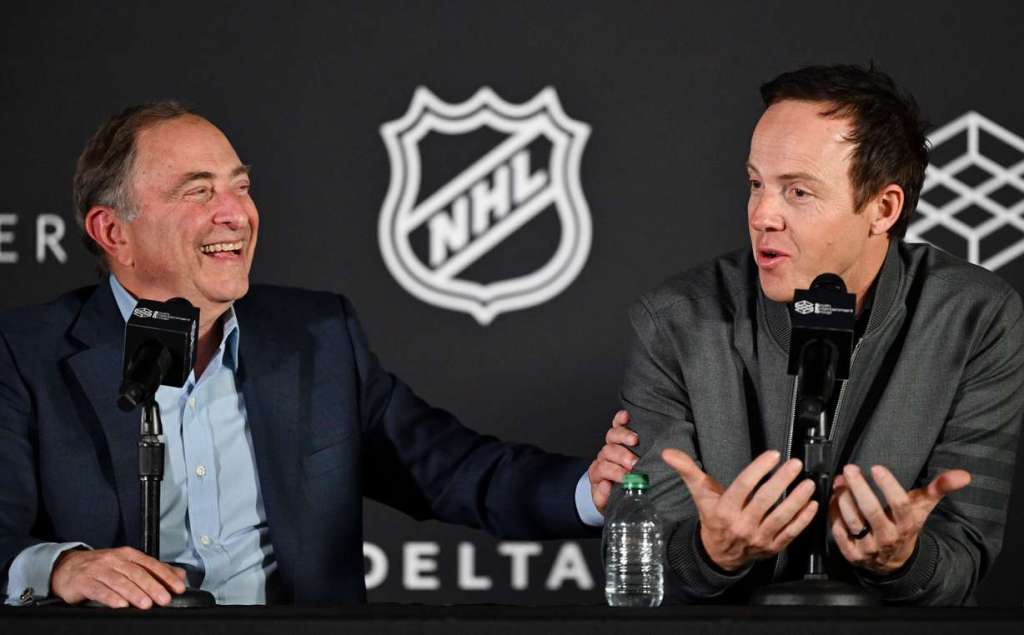
Qualtrics founder Ryan Smith’s acquisition of the Arizona Coyotes brought the National Hockey League to the Wasatch Front and has sent Utahns in a hockey-crazed frenzy. Set to begin their second season of play, the newly-minted Utah Mammoth embark upon their 2025-26 campaign with playoff expectations created by a young talented core of skilled players, implementing a run and gun style of offensive hockey that is both electrifying and potent. The NHL in Utah is no longer just a gimmick – the fans have playoff expectations and want to win now.
In 2025 Utah is not a Stanley Cup contender; they don’t have the roster composition of the Edmontons and Colorados of the Western Conference. However, the Mammoth core – comprised most notably of Clayton Keller, Logan Cooley, Dylan Guenther and newcomer JJ Peterka have an opportunity to develop chemistry as a young forward group and can all enter their primes two or three seasons down the line as the top dogs in the west begin to regress whether it be due to aging stars or salary cap moves.
If management can secure long term deals for Keller and Cooley before they reach unrestricted free agency next season, that core will remain intact through at least the 2029–30 campaign. That stability gives Utah the rare opportunity to see a brand-new NHL team and its supporters develop in lockstep, forging a shared identity from the ground up
Ambitious ownership will prove crucial in the Mammoth’s developmental years. The Smith ownership group has proven they’re willing to invest in this franchise and they want success sooner rather than later. Dealing out young pieces such as Josh Doan and Michael Kesselring for J.J. Peterka, a budding star center, are moves indicative of a “win-now” mentality in the front office.
Ownership has also proven they’re willing to make sacrifices at the bottom line to heighten the fan experience; they’ve committed millions of dollars to desperately needed Delta Center renovation, they’ve created a media entity, SEG Media, where fans can stream games online from their homes. Additionally, the ownership group has drawn national attention by minimizing concession prices to just a fraction of what you’ll see in other NHL and NBA buildings, they even let the fan base name the team. There’s even been speculation of the Winter Classic – the NHL’s premier outdoor game, will soon be coming to Rice-Eccles or Lavell Edwards stadium.
This commitment to the fan base will pay dividends in growing the game of hockey in Utah. Kids are falling in love with the game at a young age, new ice sheets are being built all over the state and enrollment for youth hockey is skyrocketing. By the time the Olympics return to Salt Lake in 2034, this fan base could witness a local product represent USA Hockey at the highest level in their own hometown.
Hockey’s embrace by Utah’s flagship universities feels inevitable, following the path Arizona State charted a decade ago. The University of Utah and Brigham Young University could capitalize on local talent and introduce NCAA D1 programs themselves. Imagine the atmosphere of the Holy War played in front of a packed Delta Center, it would be a pilgrimage every hockey fan in Utah would have to embark on at least once.
Just as we’ve seen massive ascensions in athletics at the professional level, we see this just as much, if not more so in the collegiate ranks. Utah and BYU both boast massive athletic departments, excelling not only in revenue sports like football and basketball but also in Olympic disciplines such as swimming and diving, gymnastics and skiing. For years, the two schools competed as non-conference rivals, building a competitive history that has now set the stage for even higher stakes as both programs rise to national prominence.
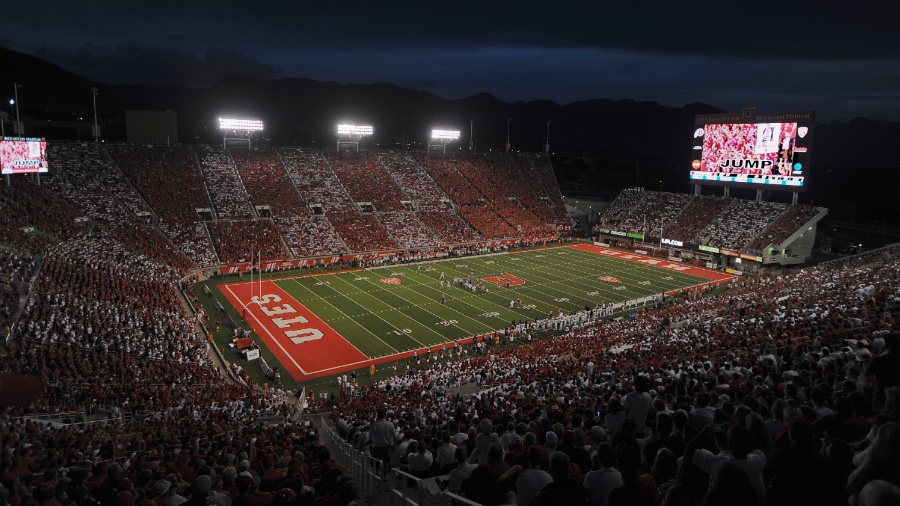
Now both programs compete in the Big 12, making them not only in-state rivals but also conference foes. The season could culminate on December 6 in Dallas, with Utah and BYU facing off for the Big 12 championship; a high-stakes showdown with major College Football Playoff implications that would elevate both athletic programs. This new era provides the perfect backdrop to examine how each school is positioning itself for sustained success. The margins between the two programs remain razor-thin; in the preseason Associated Press Top 25 poll, BYU and Utah were the first two teams out, receiving 156 and 144 votes respectively.
Utah football has a long and storied history. Highlighted by 17 bowl wins, 28 conference championships and an unclaimed national title in 2008, Utah has become a pillar in the college football landscape. In recent years, the program has emerged as a national brand, implementing a hard-nosed identity instilled by coach Kyle Whittingham leading to consistent production of pro talent, particularly on the defensive side of the ball. In the past four seasons the Utes have captured two PAC-12 titles and made two Rose Bowl appearances, signaling a continuation of the program’s tradition of excellence. With this momentum, Utah football could soon return to its former glory and see undefeated seasons and New Year’s Six bowl victories.
Like their northern counterpart, BYU football has a long history steeped in tradition. With 18 bowl wins, 23 conference championships and a National Title in ’84, BYU has consistently proven itself on college football’s biggest stage. The Y has positioned itself as a rising powerhouse in collegiate athletics, with robust NIL funding providing student-athletes unprecedented opportunities. Initiatives like the Royal Blue Collective, strategic corporate sponsorships and NCAA revenue-sharing rules have strengthened BYU’s competitive edge, fueling recent success on the field. The football program has already made its mark with a jarring Alamo Bowl victory over highly touted CU-Boulder, two recent Holy War wins after a nine-year drought and strong contention in the Big 12, signaling the Cougars’ emergence as a force in the newly shaped conference.
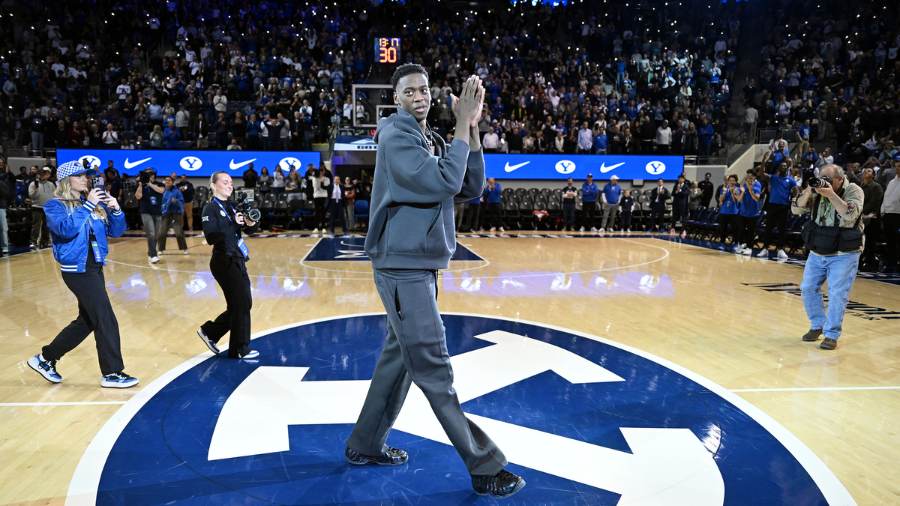
BYU basketball has likewise gained national attention, highlighted by a Sweet 16 appearance and the recruitment of elite talent, including No. 1 prospect AJ Dybantsa. The program continues to attract top-tier recruits while maintaining a winning culture, solidifying its place as one of the region’s premier basketball programs. Together, BYU’s football and basketball programs demonstrate the university’s growing prominence in collegiate athletics and underscore the broader momentum building across Utah sports.
Utah’s rise in collegiate and professional sports starts at the grassroots level, where high schools are developing talent, discipline and work ethic. Programs across the state have created an environment where young athletes can thrive, producing stars who succeed in college and beyond. Corner Canyon High School has even made national headlines by defeating powerhouse IMG Academy, proving Utah high school football can compete with the best in the country. NFL players such as Puka Nacua, Cody Barton, Taysom Hill, Jaxson Dart and Zach Wilson, are a testament to the state’s ability to nurture elite talent. The Beehive State’s sports renaissance begins here, in the gyms and fields of its high schools.
Success at the grassroots level in Utah goes beyond facilities or coaching. It is driven by a strong sense of community, where athletes, families and neighbors support one another both on and off the field. Hard work is recognized, perseverance is encouraged and achievements are celebrated collectively.
What distinguishes Utah is more than wins or championships. From cheering in the stands to volunteering in local leagues, residents take pride in supporting one another. This commitment to nurturing young talent and strengthening communities is a defining part of life in the Beehive State and plays a key role in the growth of Utah sports now and for generations to come.
 mitchlinsley.com
Leave a comment